 Delivered to a client
2026
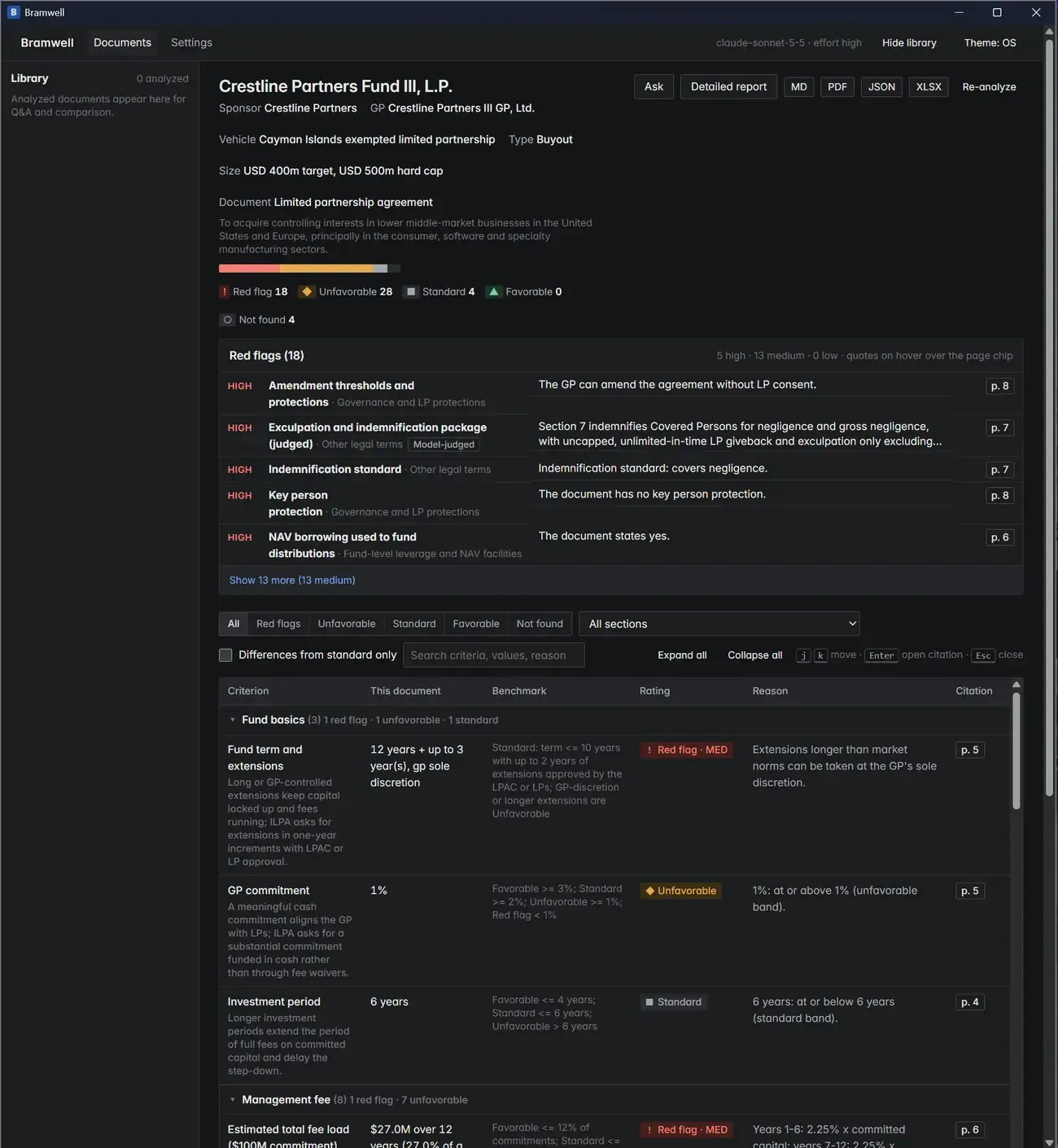
Bramwell
Reads a fund agreement in minutes and shows where every answer came from.
The problemThe terms that decide whether a deal is any good are buried across dozens of pages.
3 projects
Problems people had learned to live with, and what it took to fix them.
Delivered to a client2026
Reads a fund agreement in minutes and shows where every answer came from.
The problemThe terms that decide whether a deal is any good are buried across dozens of pages.
 Simulated data
2026
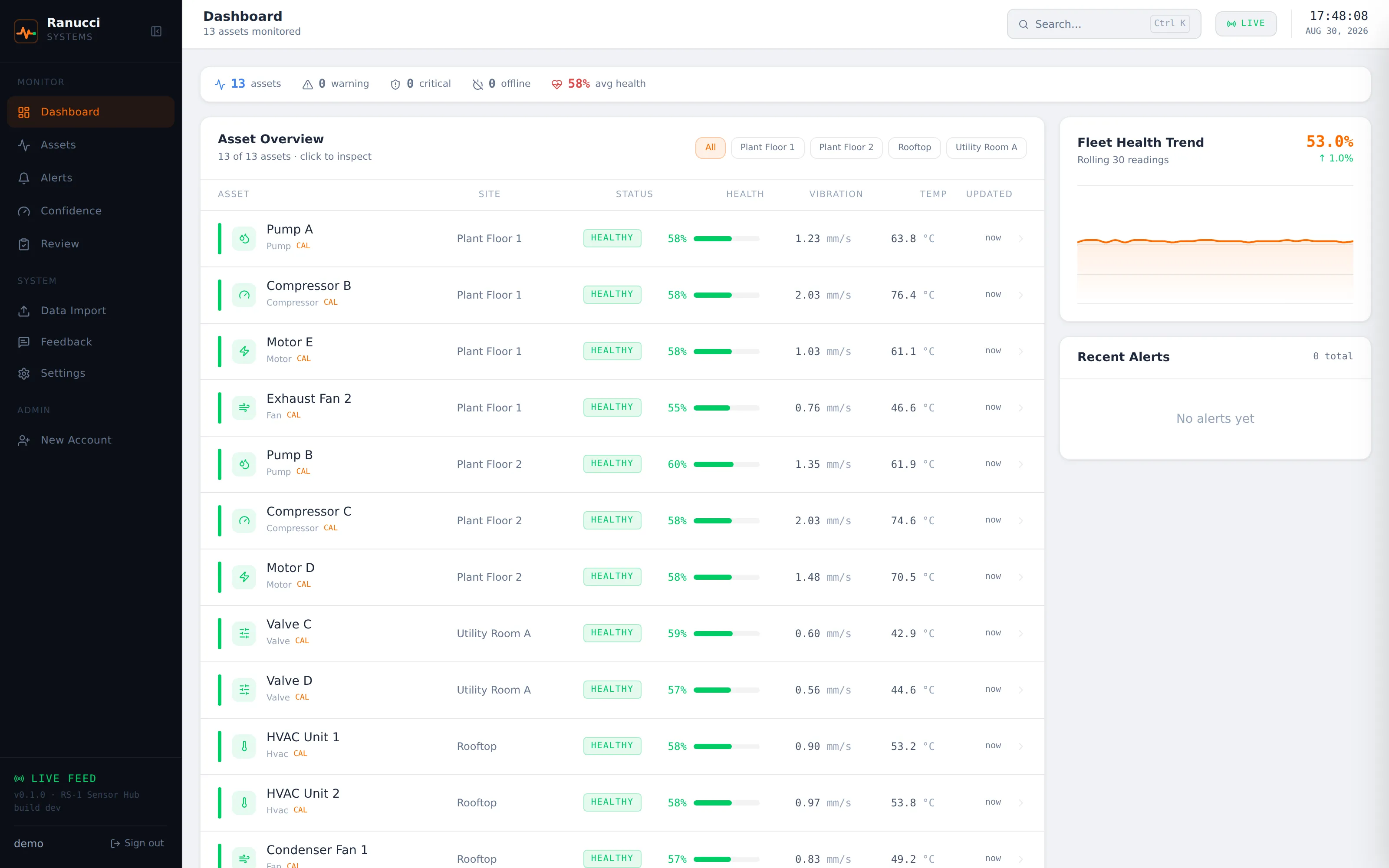
Turns a surprise breakdown into scheduled work.
The problemEquipment failure is not the expensive part. Being surprised by it is.
 Prototype
2026
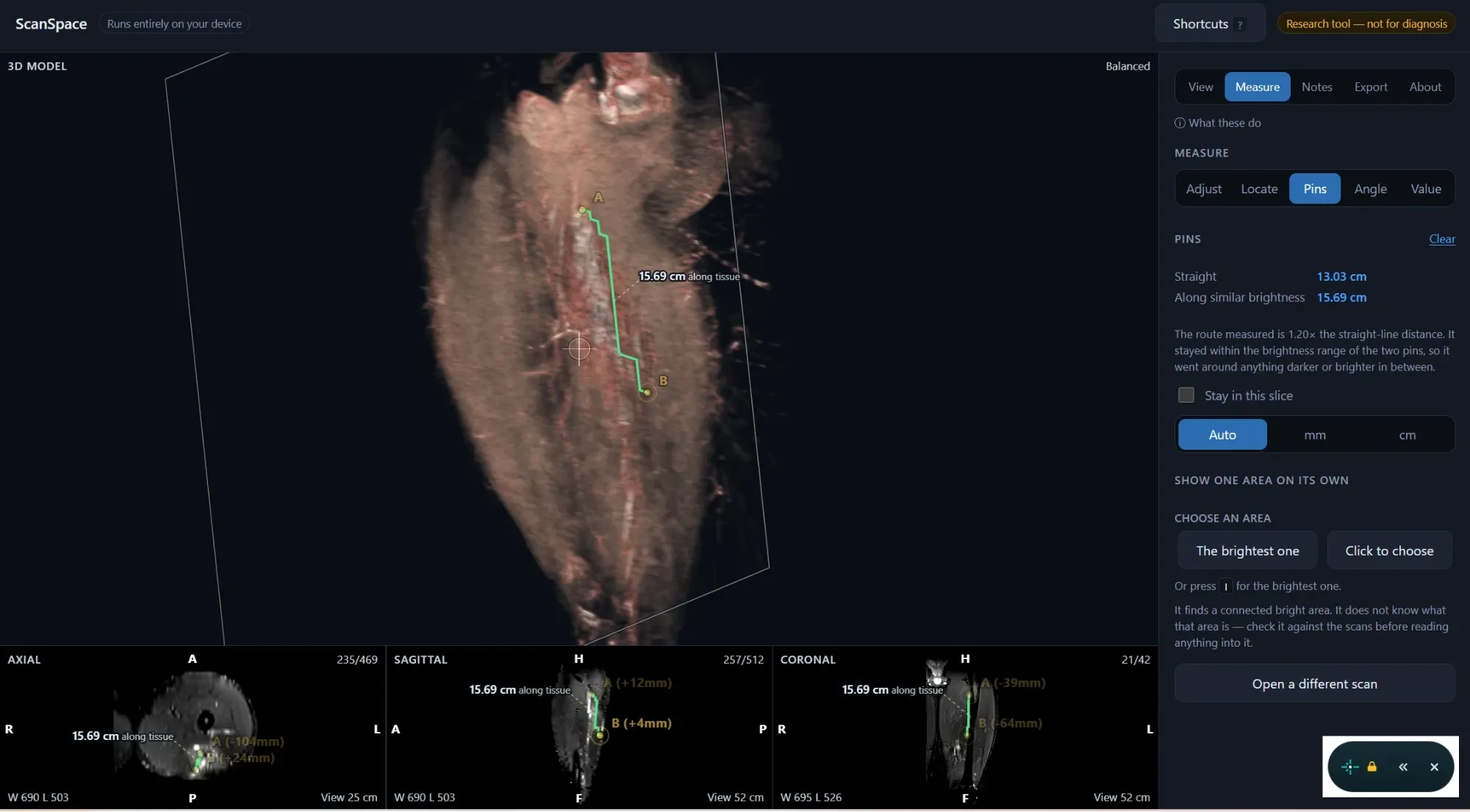
Turns a scan you cannot read into one you can.
The problemYou are handed a scan of your own body and have no way to read it.
No projects use that yet.
Not started yet. Problems worth solving that I intend to build.
Builds a face from a spoken description, then shows it moving.
The problem
A witness's memory has to survive being described out loud, drawn by an artist, and flattened into a single forward-facing sketch. What comes back looks like a drawing rather than a person, and nobody has ever met someone who holds one still expression.
Describe a face and get a plain model head to work from, then shape it directly: face structure, skin tone, eye color, hair, freckles, scars, the details a witness only remembers once they see something that is nearly right.
The part that makes it worth building is what happens after. A finished likeness can be put through the expressions that face would actually make, because recognizing someone depends far more on how a face moves and sits than on a frozen three-quarter view.
Watches game film beside you and shows you what to look for.
The problem
Watching film is a skill nobody is actually taught. A player gets handed hours of video and left to work out alone what in it matters, so most of the time spent watching teaches them very little.
An analysis layer that runs alongside the film a player is already watching on Hudl, reading it from their position. A receiver studying a secondary sees different things than a lineman does.
It tracks what the other team repeats: coverage tendencies, how individual players line up and react, where a formation leaves something open. Then it says what it noticed and why, which is the actual point. A player who is told where the weakness is has one answer. A player who learns how it was spotted can find the next one without help.
A card shop game stocked with your real cards, where every sale is real.
The problem
Selling cards from home means a photo, a price and a shipping label. The part of a card shop people actually love, walking in, browsing the case, finding the thing you did not know you wanted, has no online version, and opening a real shop is out of reach for almost everyone with a collection to sell.
Your shop is a real store. The cards, sealed boxes and graded slabs on its shelves are the ones you actually own, so when someone buys one in the game you have made a real sale and they are getting the real thing. It is the whole experience of running a card shop, without the lease.
Every shop gets its own plot, with full freedom over how it is laid out and what it looks like, and anyone can log in, look up a shop by name and walk in. Browsing becomes browsing again: wandering between real people’s stores rather than scrolling a listing.